✨ A Practical Guide

Mindory App for
ADHD & Autism
Coaches

A wellness companion your clients can lean on between sessions – and a source of objective, low-effort data you can bring into them.

By the Mindory Team · Last updated · July 2026 · ~10 min read

Learn more about Mindory for coaches →

🫧

Mindory is a wellness tool, not a medical device – it supports daily self-awareness and doesn't diagnose, treat, or replace clinical care.

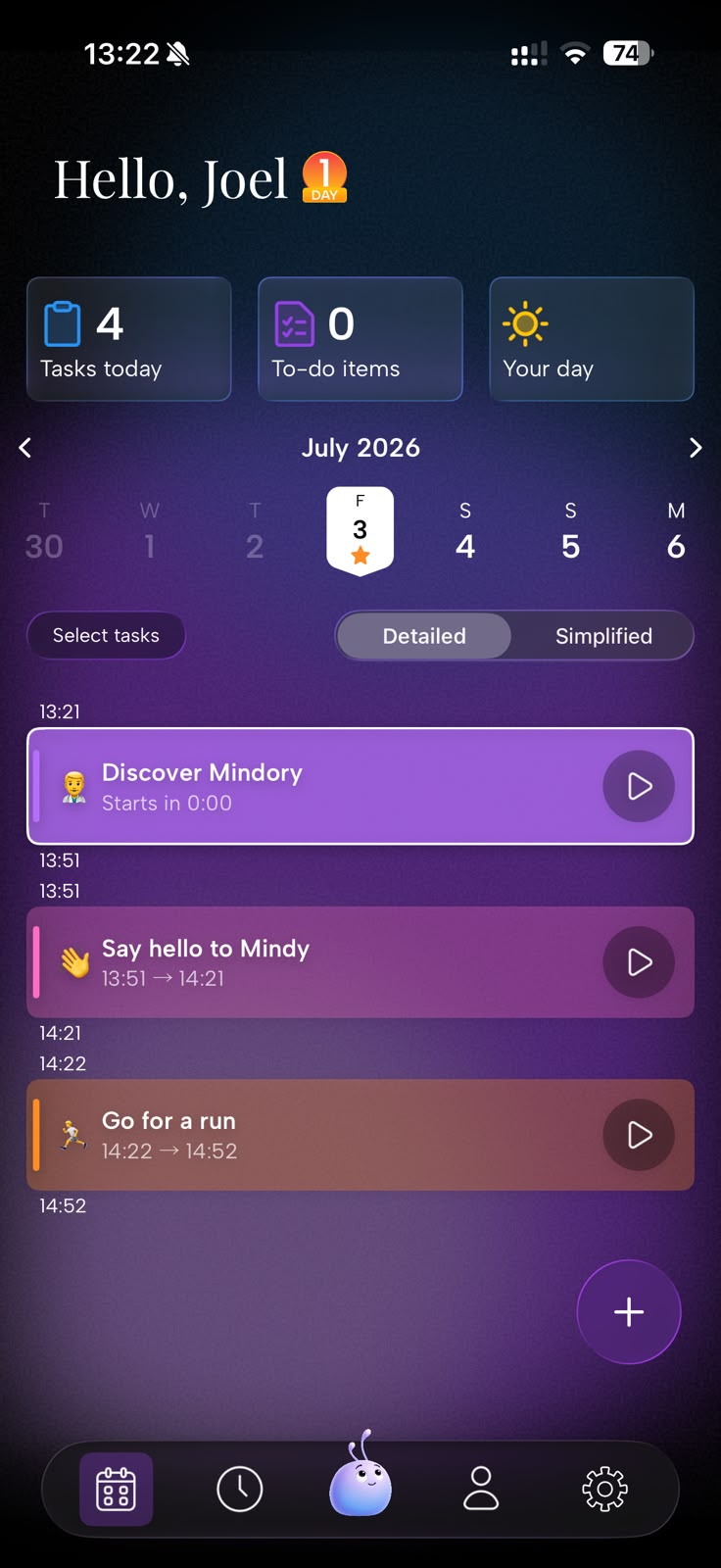
Mindory app home screen with daily greeting, task summary, calendar and timeline

Part One

Recommending Mindory to your clients

A way to keep the work you do in sessions alive during the other 167 hours of the week.

Who it's a good fit for

Adults with ADHD or autism who want lightweight support between sessions – someone (or something) to check in with, help plan the day, and interrupt overwhelm before it escalates. It's not a replacement for coaching or therapy; it's a way to keep momentum going between appointments.

What Mindory actually does

🫧

Mindy, the AI companion

Getting startedDecision fatigue

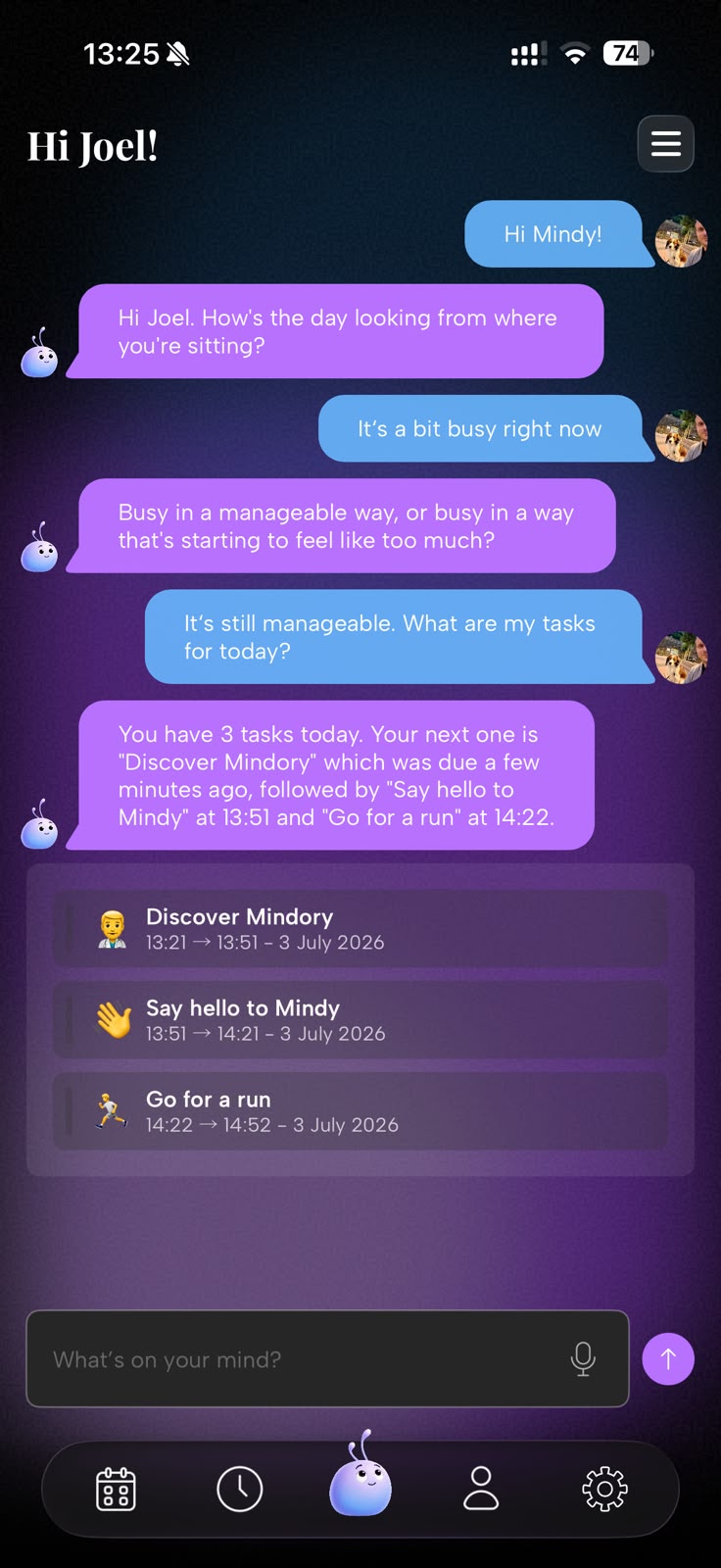
Greets the client by name, offers a daily check-in, and responds to quick-tap prompts like “Plan my day,” “I'm overwhelmed,” or “Move incomplete tasks.” Clients can also just type what's on their mind – lowering the activation energy of starting. No blank page, no decision fatigue.

Mindy chat conversation showing a daily check-in and today's tasks

AI Task Breakdown – “Use AI” / Generate sub-tasks

Executive dysfunctionTask initiationPlanning paralysis

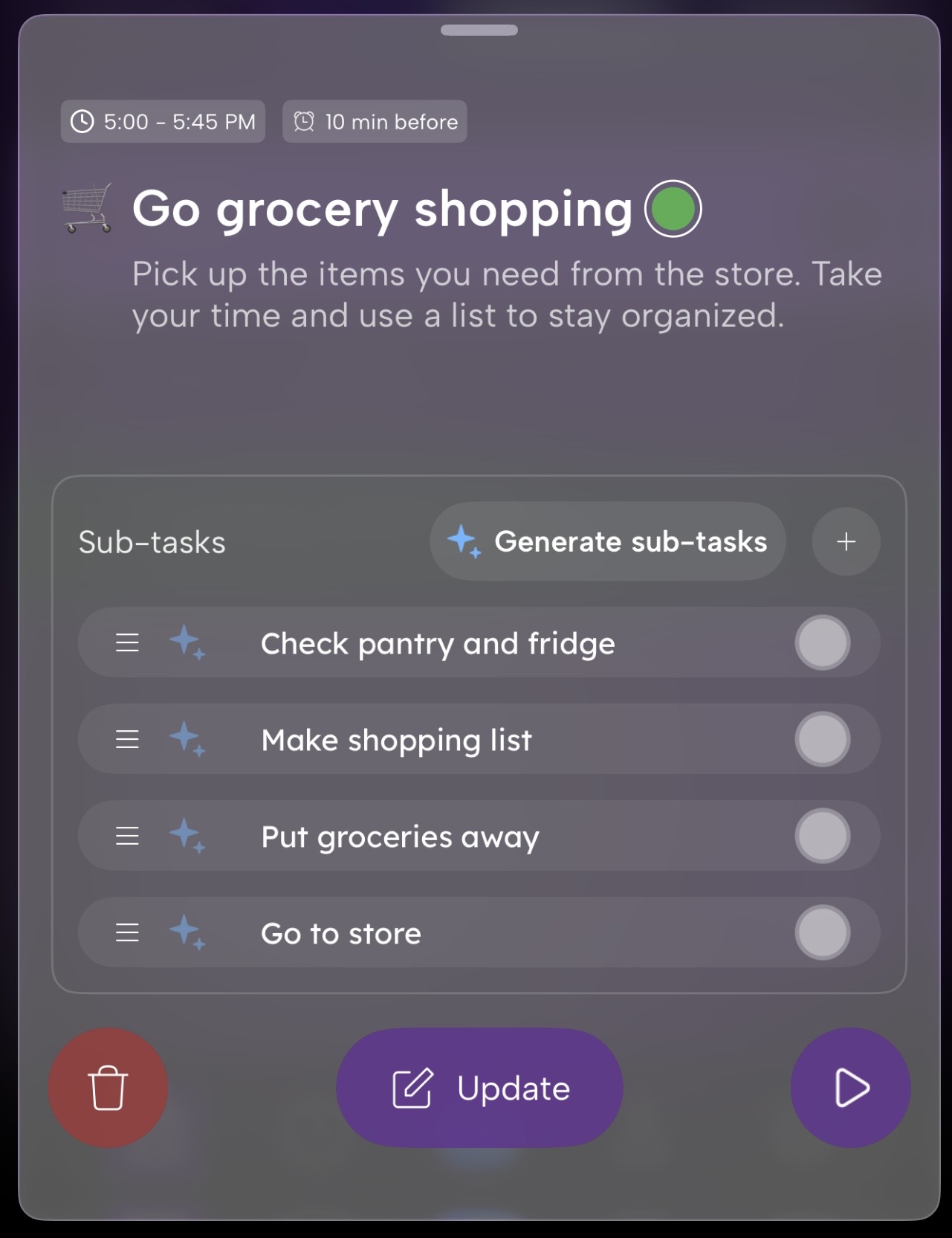
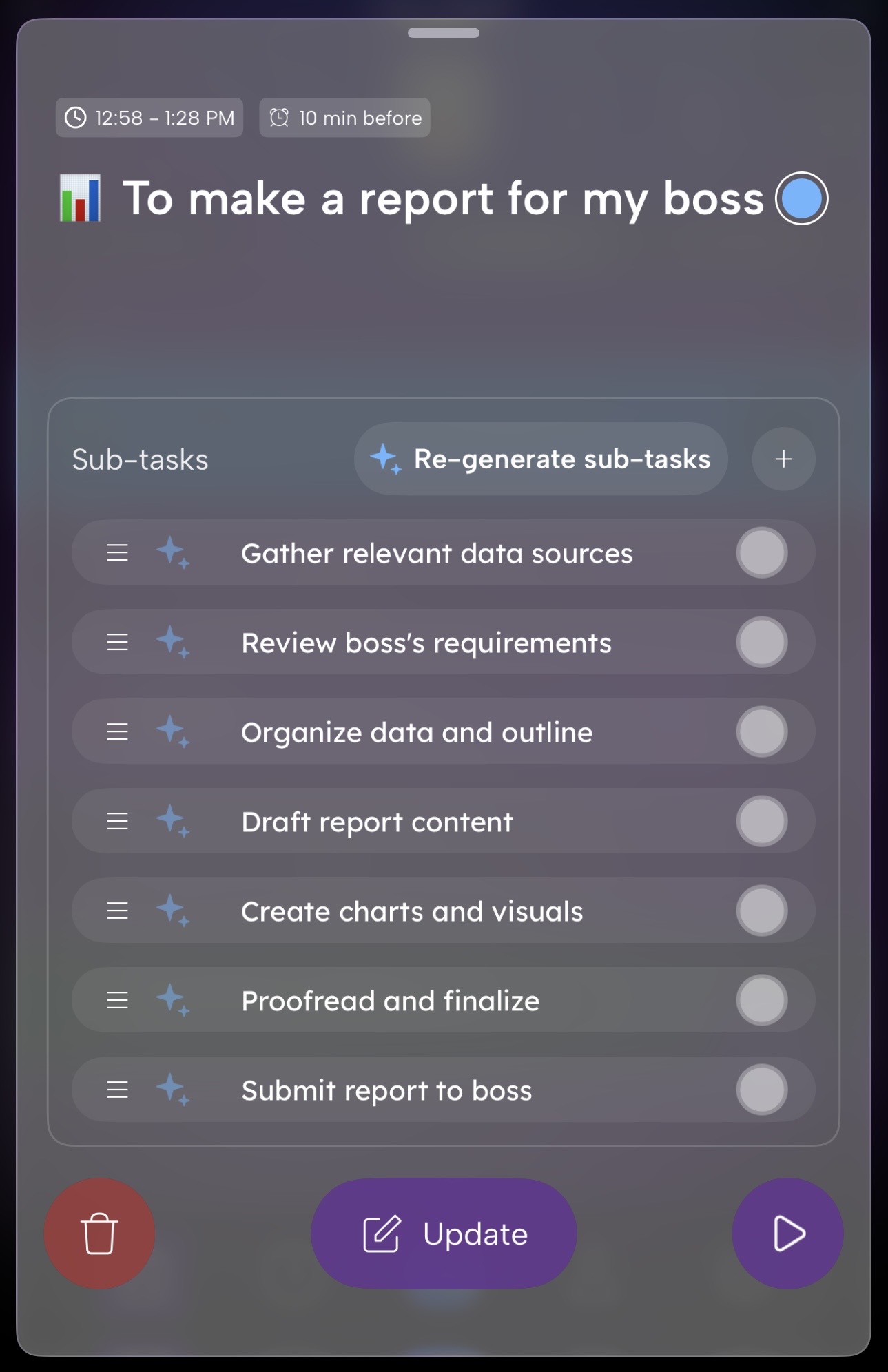
When adding a task, event, or to-do, clients type a vague or big goal and tap “Use AI” – Mindory breaks it into concrete, ordered sub-steps automatically. Each sub-task can be edited, reordered, or regenerated individually. This directly targets one of the most common ADHD barriers: knowing a task exists but not knowing where to start.

🍝 Cook a dinner Plan the menu Shopping list Buy groceries Prep Cook Set table
Task detail for 'Go grocery shopping' with AI-generated sub-tasks and a Generate sub-tasks button
Task detail for 'Make a report for my boss' with AI-generated sub-tasks and a Re-generate sub-tasks button
🌬️

Quick reset tools

Four short, guided exercises for in-the-moment regulation – 10 seconds to 1 minute, meant to be usable mid-task, not a separate wellness ritual.

🔺
Triangle Breathing – 4-4-4 pattern, ~1 min. Overstimulation · anxiety · nervous-system regulation
🌿
Grounding – notice 3 you see, 2 you feel, 1 you hear. Sensory overload · dissociation · panic
💪
Release Tension – squeeze-and-release + shoulder drop, ~9 sec. Physical tension · somatic stress buildup
👁️
Eye Focus – follow-the-dot, ~18 sec. Visual fatigue · attention refocusing after overload

More techniques are on the way – the library keeps growing.

🧠

Stress Check-In & prediction

Interoception gapsEmotional labelingSelf-awareness

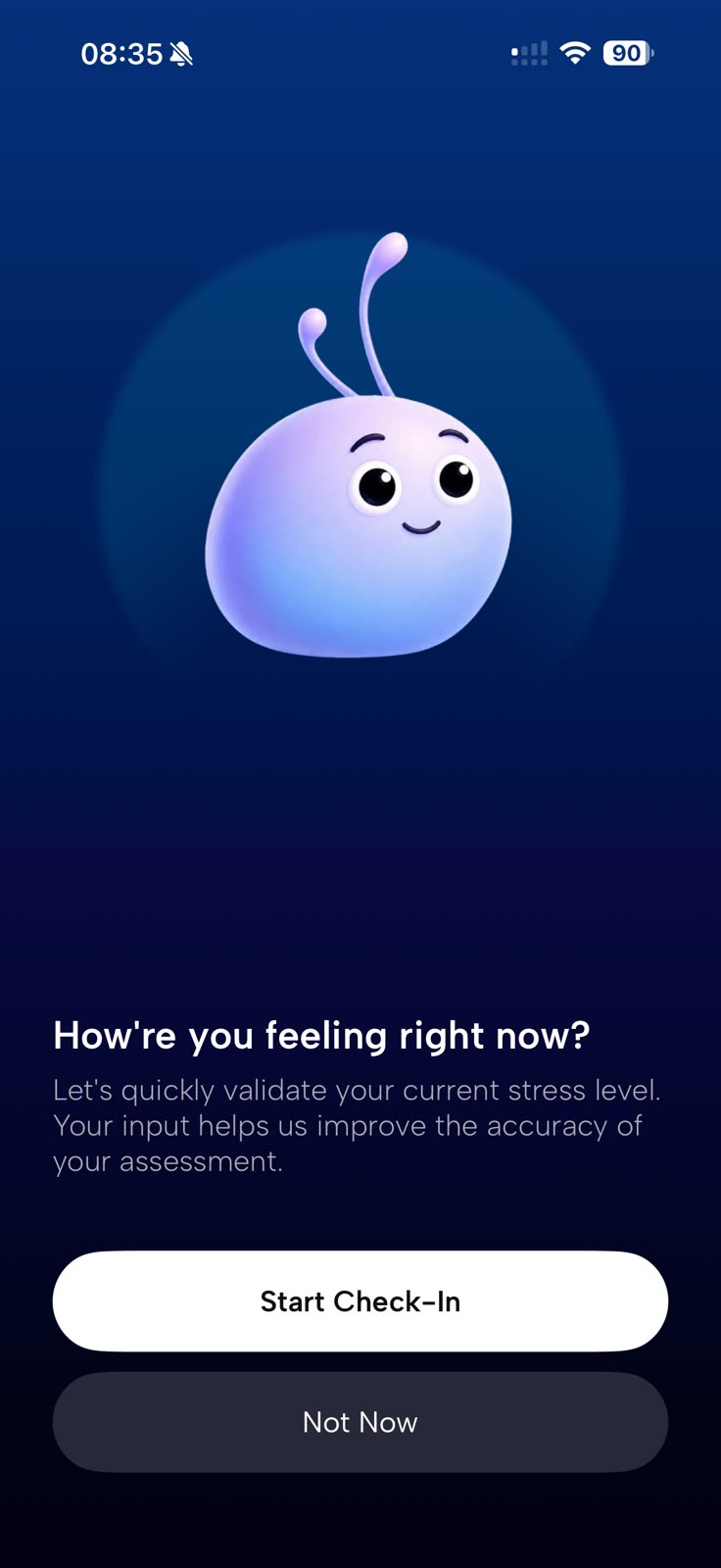
A 3-question slider check-in (morning/evening) that gives an immediate stress score out of 10, with a suggested action if it's high (“Be gentle with yourself. A 5-minute reset would help”). It works fully on its own – no wearable required – but if the client has a compatible watch (for example Apple Watch or Garmin), Mindory adds richer signal: over 2–4 weeks it builds a personal baseline for stress prediction from HRV, sleep, activity, and daily context – always compared against the client's own baseline, never a population average.

Stress check-in intro screen: How're you feeling right now? with Start Check-In button
📌

Task planning, To-Do list & Habits

Working-memory offloadTime blindness

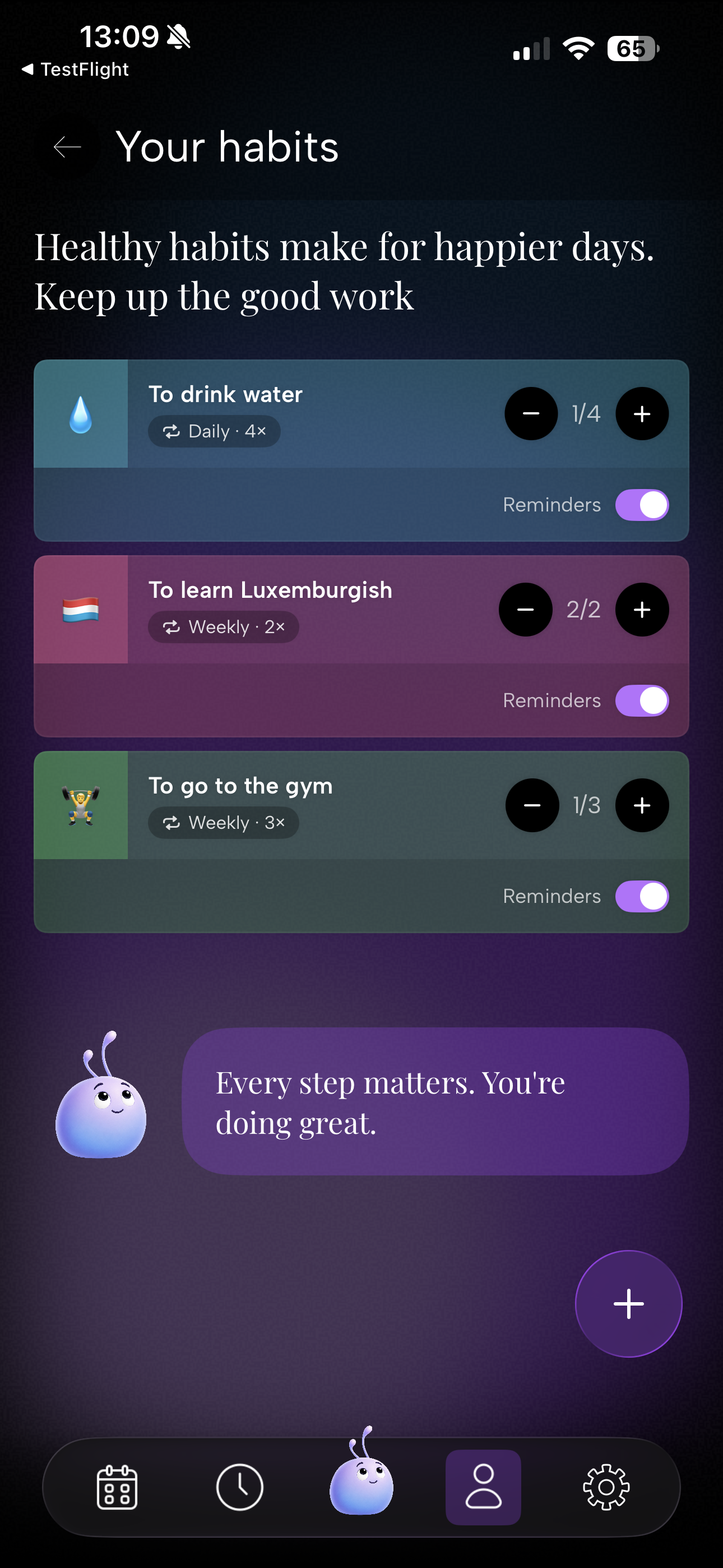
A calendar view (Detailed or Simplified) with morning/afternoon/evening groupings, a priority-tiered to-do list (high/medium/low, no-pressure framing – “just mark them off as you're going along”), and a habit tracker with frequency and reminder settings.

🔥

Streak & Statistics

MotivationRejection sensitivityConsistency

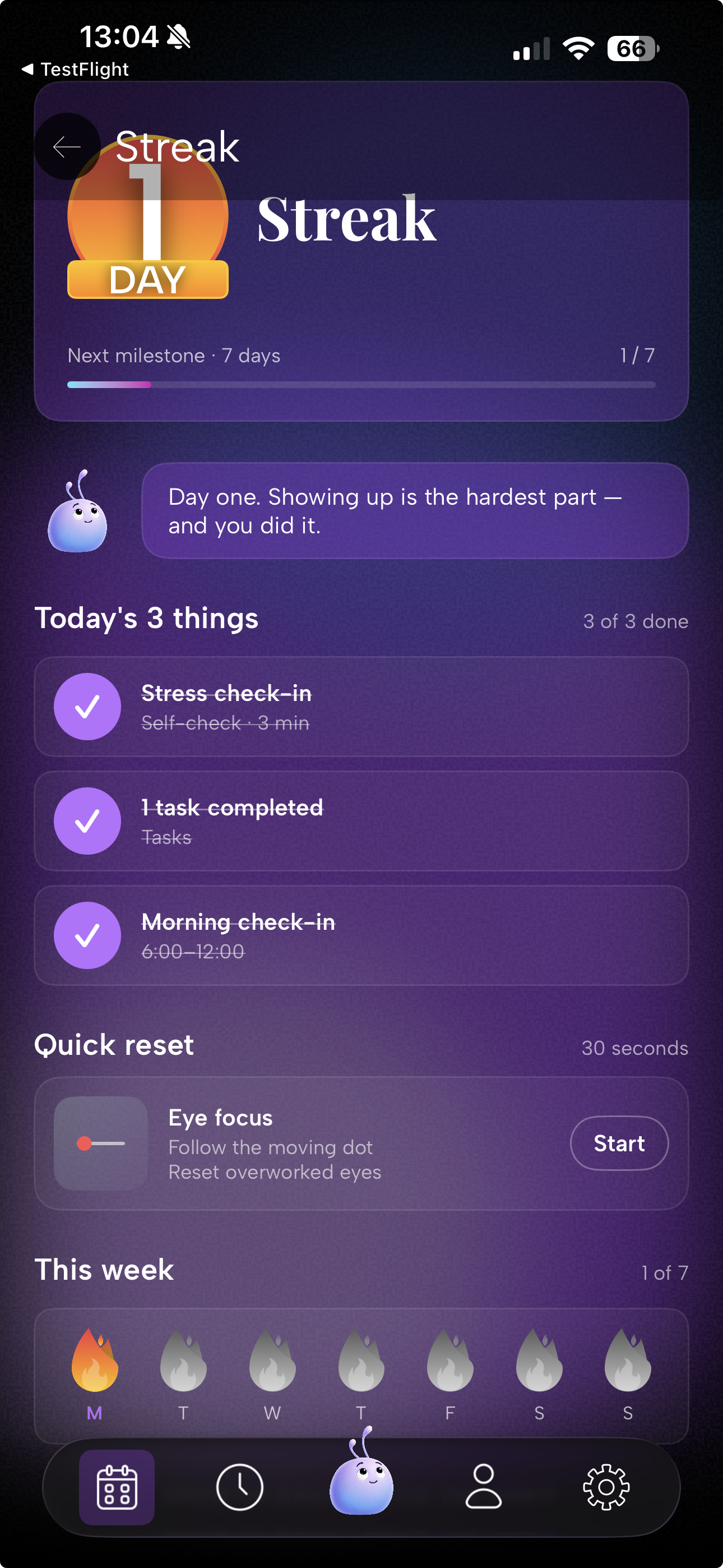
Gamified but gentle – “Today's 3 things,” a 7-day streak flame row, and a Statistics tab with completion rates by week/month/year. Framed around consistency, not perfection; “0-day” streaks are shown without judgment.

⏱️

Focus Timer

Time blindnessSustaining attentionTask-switching fatigue

A Pomodoro-style timer (default 25 min focus / 5 min rest, 4 cycles) with a customizable duration, for clients who benefit from externalized time structure.

🛌

Health & Sleep – wearable-dependent

Connecting body & mind

Steps, sleep score, resting heart rate, HRV, and recovery %, pulled from a connected wearable. Without a wearable, most of this stays empty (shown as “–” rather than fabricated numbers).

How to introduce it without overwhelming your client

The app has a lot of surface area – don't hand it over feature-complete on day one. A sequence that tends to work:

1

Week 1 – start tiny

Just the Stress Check-in (morning or evening) + one calming technique. Low commitment, immediate feedback.

2

Week 2 – give the backlog a home

Add daily planning through Mindy (“Plan my day”) or try AI Task Breakdown on one dreaded task. Most clients already have a task backlog; this gives it a starting point.

3

Week 3+ – only if they ask

Introduce habits, streaks, or the Focus Timer only when the client is asking for more structure – not by default.

If your client has a compatible wearable, mention stress prediction early – but set expectations: it needs 2–4 weeks of data before it says anything meaningful.


Part Two

Using Mindory data in your sessions

Pull up the app together to ground the session in something more concrete than “how was your week.”

Before the session, ask the client to open

1

Stress tab

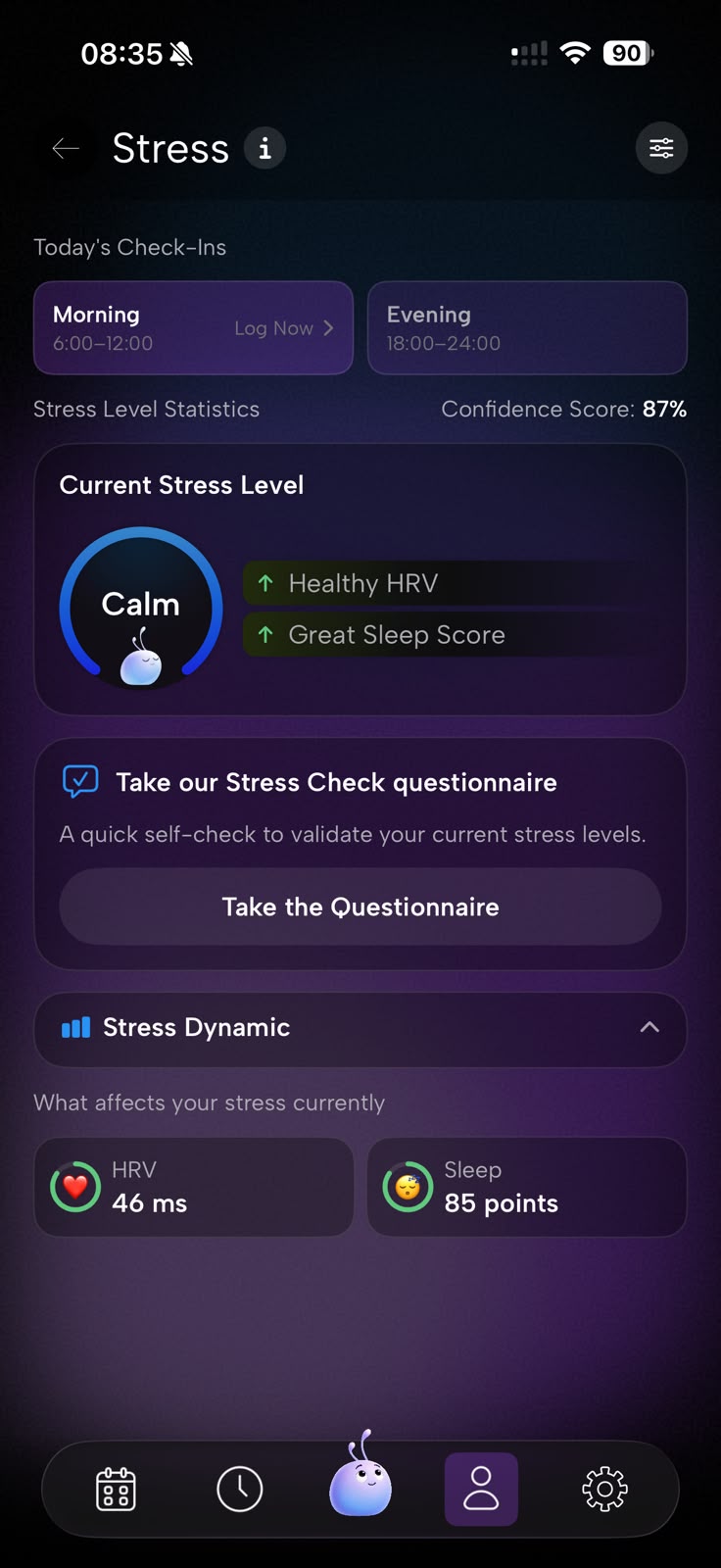
Current Stress Level gauge + Stress Dynamic graph (day / week / month)

An objective anchor instead of relying purely on memory or mood-in-the-moment. If there's a visible spike, that's a natural opening: “I see stress climbed on Thursday – what was going on?”

2

Statistics tab

Task / To-do / Habit completion rates

Surfaces avoidance or overcommitment patterns without you extracting them through questioning. A 10% completion rate against 107 planned tasks tells a different story than 69% against 16 – worth naming out loud together.

3

Streak tab

“Today's 3 things” + weekly consistency

For accountability that stays collaborative rather than a report card – the app's own framing (“Every step matters. You're doing great”) is worth echoing, not undercutting.

Stress tab showing current stress level gauge and stress dynamic factors
Streak tab showing a 1-day streak and Today's 3 things completed
Habits screen showing daily and weekly habit progress

Session prompts you can use directly

What did Mindy suggest this week that actually felt useful – and what felt off?
Let's look at your stress graph together. What's the story behind these peaks?
Your task completion is sitting at [X]% – is that about the tasks themselves, or how they were planned?
Which reset tool did you actually reach for when things got hard – if any?
Did the AI breakdown help you start something you'd been avoiding?

A few things to keep in mind

📭

Data will be sparse for new users. Sleep, HRV, and recovery show “–” until a wearable has been worn overnight. Absence of data usually just means no wearable yet.

🩺

This isn't diagnostic. Stress scores are self-reported or estimated from consumer wearable signals – a conversation starter, not a clinical measure.

🤝

Respect what the client wants to share. Not everyone will want to open their stress data in front of you – offer it as an option, not a requirement.

Questions

Frequently asked

Does Mindory replace coaching?
No. It's designed as a between-session companion – daily check-ins, quick resets, and task support – not a substitute for the relationship and judgment a coach brings.
Does a client need a smartwatch to use it?
No. Core features (Mindy, task planning, calming techniques, stress check-ins) work without one. A wearable (for example Apple Watch or Garmin) unlocks sleep, HRV, and recovery tracking, and improves the accuracy of stress prediction.
Is the data medically validated?
No – Mindory is currently a wellness app, not a certified medical device. It's built to support daily self-awareness, not diagnosis or treatment.
How long before stress prediction is useful?
Typically 2–4 weeks of regular wearable use, per Mindory's own in-app guidance.
Can I (the coach) see my client's data directly?
Not automatically – there's no coach-facing dashboard today. The current workflow is reviewing the app together during a session, screen-shared or side-by-side.